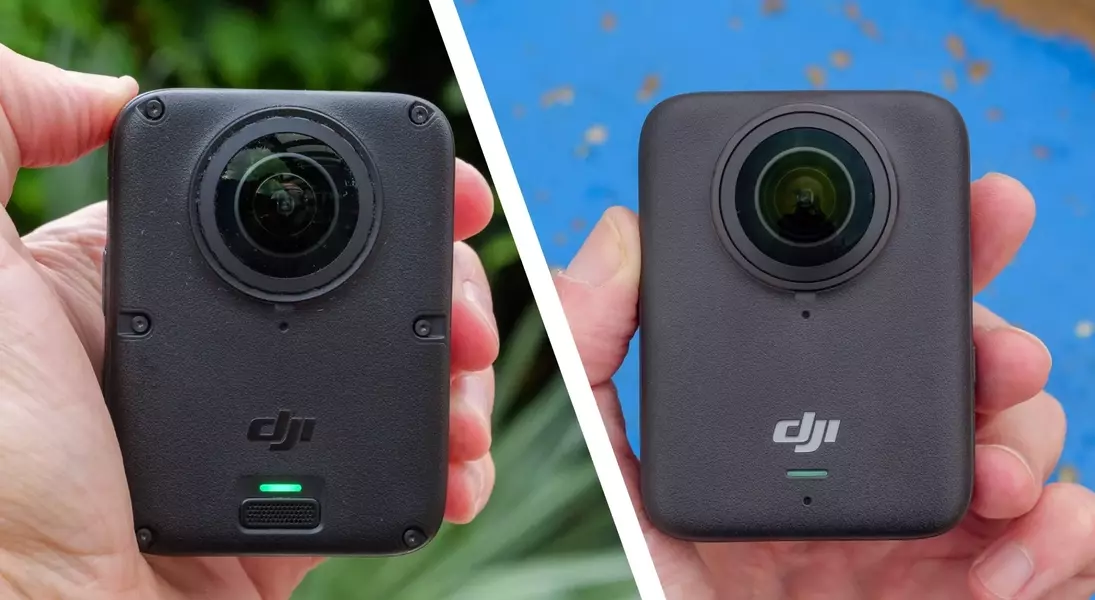
Enhancing the 360-Degree Capture Experience: A New Era for DJI Cameras
Revolutionary Lens Design and Durability: A Leap Forward for the Osmo 360 II
For enthusiasts of action sports or underwater videography, the Osmo 360 II stands out with its innovative interchangeable lens system. Unlike the fixed lenses of its predecessor, the Osmo 360 II allows for easy replacement of damaged lenses, offering a more economical solution than purchasing an entirely new device. Furthermore, DJI has fortified the lenses with an 'Ultra-Hard' optical coating, significantly boosting their scratch resistance—a crucial upgrade given the vulnerable, bulbous design typical of 360-degree cameras. Aside from this key enhancement, both generations maintain a consistent physical profile, featuring a compact 6.5oz/183g build and 10m waterproofing.
Elevated Performance for the Second Generation
While both models boast 10-meter waterproofing, the Osmo 360 II marks a substantial improvement in underwater video recording. DJI, having previously cautioned against using the original Osmo 360 for submerged filming due to processing and stitching limitations, now encourages its successor's use in aquatic environments. This indicates significant software and metering advancements, making the Osmo 360 II the clear choice for capturing high-quality underwater 360-degree footage. Additionally, the new model is equipped with a larger 2,150mAh battery, a 10% increase over the original's 1,950mAh, with both batteries being cross-compatible.
Advanced Imaging Capabilities: A Subtle Yet Significant Enhancement
The Osmo 360 II offers refined image quality, with the most striking improvement being an expanded dynamic range from 13.5EV to 14.5EV. Video recording at 8K now benefits from a smoother 60fps, up from 50fps, and the maximum resolution for 360-degree timelapses has doubled to an impressive 16K. Photo capabilities remain at 120MP, but the addition of HDR capture in the latest model further enriches visual fidelity. Despite DJI's claim of a 'major leap' in image quality, the enhancements for land-based recording are more incremental than revolutionary, setting it apart primarily for its specialized upgrades.
Pricing and Market Position: Evaluating Value Across Generations
The introduction of the Osmo 360 II comes with a noticeable price increase, approximately 25% higher than the original, and it is not available in the US market. In contrast, the original Osmo 360 has seen price reductions, making it a more budget-friendly option in some regions, especially in the US where it is still available. Competitors like GoPro's Max 2 are often found at lower price points than both DJI models, while Insta360's X6 sits at the higher end of the spectrum. The pricing strategy for the Osmo 360 II positions it as a premium option, particularly for users who value its specific enhancements, despite the increased cost and regional limitations.
Concluding Thoughts on the Enhanced DJI Osmo 360 II
The Osmo 360 II represents a strategic refinement of DJI's 360-degree camera line, effectively addressing key vulnerabilities of its predecessor, notably with replaceable lenses and superior underwater imaging. These critical improvements justify its higher cost for users focused on action sports and submerged environments. While the GoPro Max 2 offers a more affordable alternative and the Insta360 X6 presents a pricier option, the Osmo 360 II strikes a compelling balance, particularly in markets where it is available. Ultimately, it signifies DJI's commitment to durability and advanced functionality, establishing the Osmo 360 II as a leading choice in the dynamic 360-camera sector.