The Wildlife Photographer of the Year competition, produced by the Natural History Museum, London, has unveiled a glimpse of its commended entries for its 62nd edition. These captivating images offer a window into the natural world's diverse narratives, masterfully captured by a range of photographic equipment. Notably, an analysis of the camera gear used reveals a fascinating insight: two veteran Nikon DSLR models, the D500 and D850, frequently appear in the credits, demonstrating their persistent relevance and capability in an increasingly mirrorless-dominated landscape.
Wildlife Photography's Unsung Heroes: The Nikon D850 and D500
The prestigious Wildlife Photographer of the Year contest has once again captivated audiences with its early release of highly commended images, ahead of the grand announcement of all 100 winning photographs on October 16th. Among the diverse collection of photographic tools utilized to create these stunning visual narratives, a striking observation has emerged: two venerable Nikon DSLR cameras, the D850 and the D500, are prominently featured, each responsible for two of the previewed winning shots.
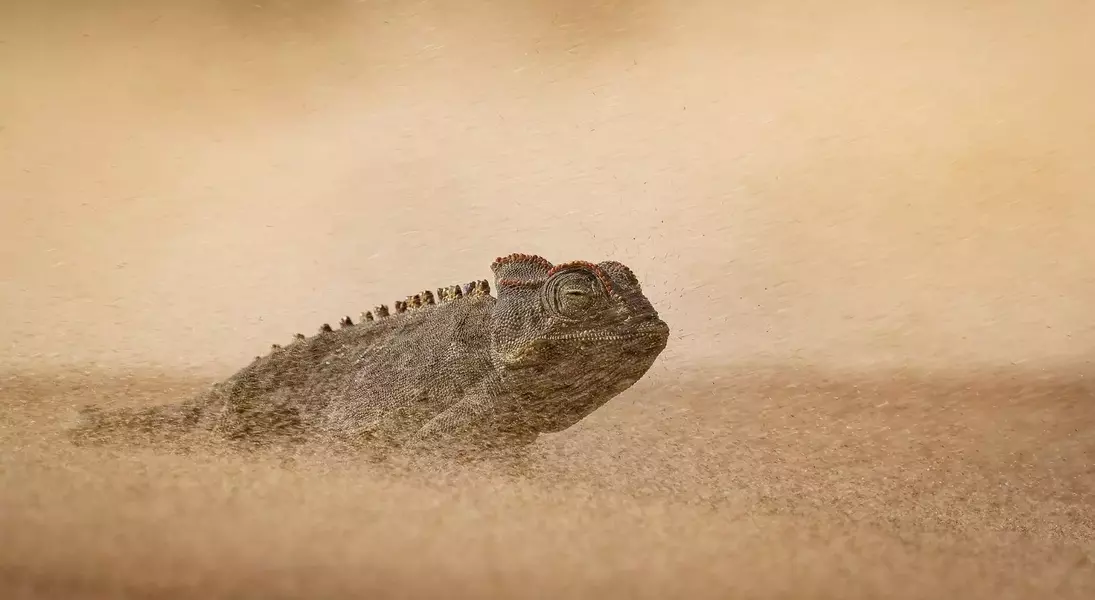
Dewald Tromp from South Africa captured the compelling 'Eye of the Storm,' depicting a chameleon's arduous journey through a sandstorm in Nigeria, using the Nikon D850. This same model was also the choice for American photographer Ralph Pace's mesmerizing image of a sea hare gracefully navigating through eelgrass in Monterey Bay.
Meanwhile, the Nikon D500 proved its mettle in two other remarkable entries. Jack Crawford from the UK, recognized in the 15-17 Years category, perfectly immortalized a swift mid-flight beneath the imposing shadow of a 747. Additionally, Canadian photographer Shane Gross utilized his Nikon D500, housed within an Aquatica AD500 underwater casing, to create a stunning split-level image of a school of bigeye trevally off the Seychelles coastline.
The Nikon D850, introduced in 2017, remains a beacon in wildlife photography. Boasting a substantial 45.7-megapixel full-frame sensor, its 153-point autofocus system, though predating the most advanced mirrorless technologies, continues to deliver remarkable precision and tenacity when tracking dynamic subjects. Renowned for its superb ergonomics and clear optical viewfinder, the D850 has consistently enabled photographers to produce exceptional wildlife imagery. Nikon itself acknowledged its legacy when they promoted their mirrorless Z8 as the spiritual successor, the "new D850."
Preceding the D850 by a year, the Nikon D500 recently celebrated its tenth anniversary. This APS-C powerhouse quickly established a reputation for its speed, offering a rapid 10 frames per second burst rate capable of capturing up to 200 RAW files, complemented by an outstanding autofocus system. This combination made it a favorite among wildlife photographers seeking high performance without the premium cost of full-frame alternatives, and its continued presence in such a prestigious competition underscores its enduring appeal and effectiveness.
The continued strong showing of Nikon's D850 and D500 in a competition like Wildlife Photographer of the Year sends a clear message: while mirrorless cameras represent the cutting edge of photographic technology, the traditional DSLR still possesses a powerful appeal. Their proven reliability, robust build quality, and exceptional image-making capabilities mean that, for many seasoned professionals, these cameras remain indispensable tools for capturing the raw beauty and drama of the natural world. This reinforces the idea that true photographic artistry transcends equipment trends, relying more on the photographer's vision and skill than solely on the latest technology.